

University of Minnesota
Elias Research Lab
Decoding microbes, designing enzymes
We decipher how biological molecules evolve, uncover the molecular basis of their functions, and develop new methods to engineer them, with the aim of creating soft, ecological solutions to current and emerging societal issues.
Windows on the lab
Most of them are something you can try. The science is simplified, but the ideas are the ones we work on.
Our main project
Where most of the lab's work goes.
Main project · Quorum sensing and quenching
Hijacking bacterial communication
Bacteria use chemical signalling to exchange information and coordinate behaviors. We develop molecular tools to hijack this communication and study this information flux, a promising way to address microbial resistance.
- Wound dressings
- Antifouling paint
- Fewer antibiotics
Try it. Raise the number of bacteria until the glass lights up. Then add lactonase, with the slider or by clicking the mosaic, and watch the signal fall.
Simulation
- Communication signal
- QS on
- QS off

Key methods
The approaches that run through all our work.
Key method · Protein engineering
Writing better enzymes
The lab is engaged in structure-based, combinatorial engineering approaches to improve the activities of lactonases, with applications from anti-virulence plasters and anti-biofouling paints to insecticide decontamination.
- Decontamination
- Wound dressings
- Antifouling paint
Try the minigame! You run a protein engineering experiment and screen variants over five rounds. In each round, pick the best variant and keep it for the next. See how mutations interact in different protein backgrounds, and make the best enzyme you can.
- Parent enzyme
- ×1.0
- Goal
- ×60
- Screens left
- 8
- Best on this plate
- none yet
How to play
- Additive effects multiply as expected
- Positive epistasis better than expected
- Negative epistasis less gain than expected, or even a loss
A simulated landscape, for illustration. As in the lab, each round screens a fresh plate of variants built on the best one so far.
Best enzymes on this device
This list is kept in this browser only.

Key method · Structural biology
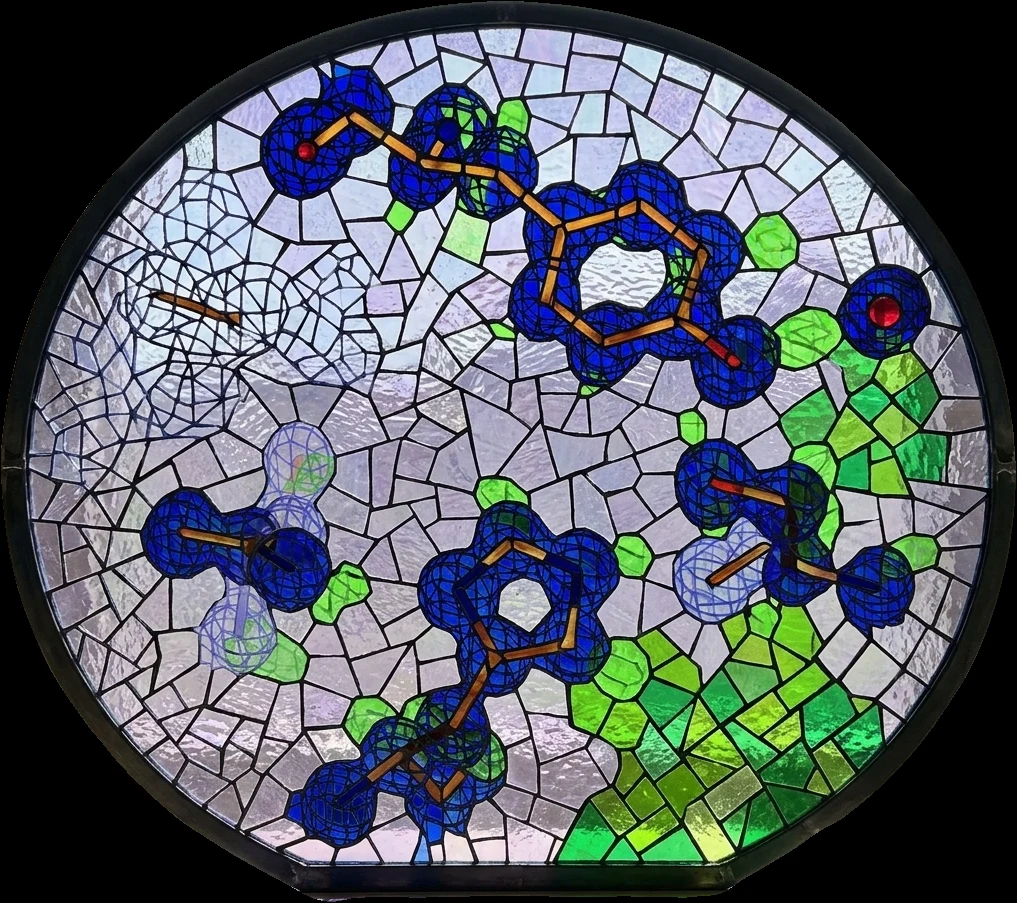
Seeing enzymes atom by atom
X-ray crystallography shows us enzymes in atomic detail, down to ultra-high, sub-ångström resolution. Structures guide how we engineer enzymes, explain how they recognize their substrates, and reveal how they work.
- Enzyme design

Key method · Multi-omics analysis
Reading whole microbial communities
Over the years, our group has increased its use of sequencing to understand the impact of quorum quenching strategies on microbiomes. It lets us follow whole microbial communities, not just one species at a time.
- Oral health
- Gut health

Past and emerging research interests
Where we have worked before, and where we are looking next.
Research interest · Phosphate uptake
Ion transport in microbes
Numerous ions are both essential for life and limiting in natural environments. We investigate the elaborate molecular strategies microbes use to scavenge these essential nutrients from depleted environments while excluding potentially toxic competitors.
- Cleaner water
Try it. Raise the fraction of arsenate among the ions, and phosphate still gets through. Then switch off the selectivity toggle and see what the cell would take in.
Simulation of phosphate uptake
Taken up Phosphate 0 Arsenate 0
This depicts the Pst phosphate uptake system, a key way microbes scavenge phosphate. For simplicity, the phosphate-binding protein that does the selecting is not shown: the selectivity toggle stands in for it.

Research interest · Enzymes from extremophiles
Enzymes built to last
Enzymes from microbes that thrive in hot springs, acid, radiation and other extremes are intrinsically stable. That extreme stability makes them easier to study and ready for real-world applications.
- Industrial use
- Decontamination
Try it. Drag the slider across the hot spring. One side tells what the water is like, the other what its microbes give us. Click the glass to send a ripple.


Inside a hot spring
- Grand Prismatic Spring, in Yellowstone, is 200-330 ft (about 60-100 m) across and more than 121 ft (37 m) deep.
- Colorless and yellow microbes live in the hottest water, and orange, brown and green ones in the cooler water.
- Yellowstone's springs range from acidic (pH 0-5) to alkaline (pH 7-11). In the alkaline geyser basins, bacteria and archaea dominate above 75 °C (167 °F).
- The record for life is 122 °C, for the archaeon Methanopyrus kandleri strain 116, from a deep-sea vent and grown under high pressure.
Thermostable enzymes at work
- Taq DNA polymerase comes from Thermus aquaticus, first isolated from Yellowstone hot springs. Its activity half-life is 9 min at 97.5 °C, so PCR can heat DNA in every cycle without fresh enzyme.
- Industrial starch processing runs in jet cookers at 100 °C or more, with thermostable α-amylases.
- Our lactonase SsoPox, from the archaeon Saccharolobus solfataricus, resists heat, solvents, sterilization and storage, and stays active at subzero temperatures.
Sources: US National Park Service, Grand Prismatic Spring; US National Park Service, thermophilic communities; Takai et al., PNAS 2008; Brock and Freeze, J Bacteriol 1969; Lawyer et al., PCR Methods Appl 1993; J Sci Food Agric 2014, thermostable α-amylase and jet cooking; Rémy et al., Sci Rep 2016.
Our papers into a mosaic, over time
Each tile is a paper, stacked by year since 2007 and colored by topic. Point at or tab to a tile to read it, and open it to go to the paper.
Prefer a list? Go to all 86 publications
2007
- Stabilisation of the active form(s) of human paraoxonase by human phosphate binding protein. Biochem Soc Trans 35:1616-20 (2007). Topic: Phosphate and extremophiles.
- Structure-Function Relationships in a Bacterial DING Protein. FEBS Letters 581:3455-60 (2007). Topic: Phosphate and extremophiles.
- Crystallization, diffraction data collection and preliminary crystallographic analysis of DING protein from Pseudomonas fluorescens. Acta Cryst F 63:590-592 (2007). Topic: Phosphate and extremophiles.
- Crystallization and preliminary X-ray diffraction analysis of the hyperthermophilic SsoPox phosphotriesterase. Acta Cryst F 63:553-555 (2007). Topic: Phosphate and extremophiles.
2008
- Structural basis for a natural lactonase and promiscuous organophosphate hydrolysis activities. J Mol Biol 379:1017-28 (2008). Topic: Quorum sensing and lactonases.
- Tandem use of X-ray crystallography and mass spectrometry to obtain ab initio the complete amino acids sequence of HPBP. Proteins 71:1708-1720 (2008). Topic: Phosphate and extremophiles.
2009
- Elucidation of the phosphate binding mode of DING proteins revealed by sub-Ångstrom X-ray crystallography. JACS 131:7879-86 (2009). Topic: Phosphate and extremophiles.
- Evidence for Phosphatase Activity of p27SJ and Its Impact on the Cell Cycle. J Cell Biol 107:400-7 (2009). Topic: Phosphate and extremophiles.
- For Whom the Bell Tolls? DING Proteins in Health and Disease. Cell Mol Life Science 66:2205-18 (2009). Topic: Phosphate and extremophiles.
- Structural determinants of the high thermal stability of SsoPox from the hyperthermophilic archeon Sulfolobus solfataricus. Extremophiles 13:461-70 (2009). Topic: Phosphate and extremophiles.
2010
- Eukaryotic DING proteins are endogenous: an immunohistological study in mouse tissues. PLoS One 5(2):e9099 (2010). Topic: Phosphate and extremophiles.
- Integrative analytical approach for deciphering cofactors that modulate activity and stability of human paraoxonase (PON1). J Chromatography B 878:1346-55 (2010). Topic: Biomedicine and more.
2011
- Human-Phosphate-Binding-Protein inhibits HIV-1 gene transcription and replication. Virology Journal 8:352 (2011). Topic: Phosphate and extremophiles.
- Directed evolution of sulfotransferases and paraoxonases by ancestral libraries. J Mol Biol 411:837-53 (2011). Topic: Enzyme engineering.
- Crystallization and preliminary X-ray diffraction analysis of the hyperthermophilic S. islandicus lactonase. Acta Cryst F 67:354-357 (2011). Topic: Quorum sensing and lactonases.
- Structural insights and ab initio sequencing within the DING proteins family. J Synchrotron Radiation 18:45-9 (2011). Topic: Phosphate and extremophiles.
2012
- DING proteins, their biochemical and structural properties, and their ability to inhibit HIV-1 replication. Bulletin de l'Académie Nationale de Médecine 196(3):693-703 (2012). Topic: Phosphate and extremophiles.
- Crystallization and preliminary X-ray diffraction analysis of the organophosphorus hydrolase OPHC2. Acta Cryst F 69:73-6 (2012). Topic: Enzyme engineering.
- Characterisation of the organophosphate hydrolase catalytic activity of SsoPox. Scientific Reports 2:779 (2012). Topic: Phosphate and extremophiles.
- Structural and Enzymatic characterization of the lactonase SisLac from Sulfolobus islandicus. PLoS One 7(10):e47028 (2012). Topic: Quorum sensing and lactonases.
- The molecular basis of phosphate discrimination in arsenate rich environments. Nature 491(7422):134-7 (2012). Topic: Phosphate and extremophiles.
- Catalytic versatility and backups in enzyme active sites: The case of serum paraoxonase 1. J Mol Biol 418:181-96 (2012). Topic: Enzyme engineering.
- The Level of DING proteins is increased in HIV-infected patients. PLoS One 7:e33062 (2012). Topic: Phosphate and extremophiles.
- Divergence and Convergence in Enzyme Evolution: The Parallel Evolution of Paraoxonases from Quorum Quenching Lactonases. J Biol Chem 287:11-20 (2012). Topic: Quorum sensing and lactonases.
2013
- Structural and enzymatic characterization of the phosphotriesterase OPHC2. PLoS One 8:e77995 (2013). Topic: Enzyme engineering.
- Crystallization and preliminary X-ray diffraction analysis of the lactonase VmoLac. Acta Cryst F 69:1235-8 (2013). Topic: Quorum sensing and lactonases.
- Crystallization and preliminary X-ray diffraction analysis of a high affinity phosphate-binding protein from P. aeruginosa. Acta Cryst F 69:1143-1146 (2013). Topic: Phosphate and extremophiles.
- Differential active site loop conformations mediate promiscuous activities in the lactonase SsoPox. PLoS One 8:e75272 (2013). Topic: Enzyme engineering.
- Hydrogen atoms in protein structures: high-resolution X-ray diffraction structure of the DFPase. BMC Research Notes 6:308 (2013). Topic: Enzyme engineering.
- What makes a protein fold amenable to functional innovation? Fold polarity and stability tradeoffs. J Mol Biol 425:2609-21 (2013). Topic: Enzyme engineering.
- Crystallization and X-ray analysis of a DING protein from Pseudomonas aeruginosa PA14. Acta Cryst F 69:425-9 (2013). Topic: Phosphate and extremophiles.
- Catalytic metal ion rearrangements underline promiscuity and evolvability of a metalloenzyme. J Mol Biol 425:1028-38 (2013). Topic: Enzyme engineering.
2014
- Inhaled Lactonase Reduces Pseudomonas aeruginosa Quorum Sensing and Mortality in Rat Pneumonia. PLoS One 9(10):e107125 (2014). Topic: Quorum sensing and lactonases.
- Crystal structure of the phosphate-binding protein (PBP-1) of an ABC-type phosphate transporter from Clostridium perfringens. Scientific Reports 4:6636 (2014). Topic: Phosphate and extremophiles.
- The DING Family of Phosphate Binding Proteins in Inflammatory Diseases. Adv Exp Med Biol 824:27-32 (2014). Topic: Phosphate and extremophiles.
- SacPox from the thermoacidophilic crenarchaeon Sulfolobus acidocaldarius is a proficient lactonase. BMC Research Notes 7:333 (2014). Topic: Quorum sensing and lactonases.
- Ambiguous evidence for assigning DddQ as a dimethylsulfoniopropionate lyase. PNAS 111:E2078-9 (2014). Topic: Biomedicine and more.
- Ancestral mutations as a tool for solubilizing proteins: the case of a hydrophobic phosphate-binding protein. FEBS Open Bio 4:121-7 (2014). Topic: Phosphate and extremophiles.
- The Universality of Enzymatic Rate-Temperature Dependency. Trends in Biochemical Sciences 39:1-7 (2014). Topic: Phosphate and extremophiles.
2015
2016
- Harnessing hyperthermostable enzymes for biotechnological applications. Scientific Reports (2016). Topic: Phosphate and extremophiles.
- Enzymes for disrupting bacterial communication, an alternative to antibiotics?. Ann Pharm Fr (2016). Topic: Quorum sensing and lactonases.
- Purification, characterization, crystallization and crystallographic analysis of the quorum quenching lactonase from Geobacillus caldoxylosilyticus. Acta Cryst F 72:681-6 (2016). Topic: Quorum sensing and lactonases.
- Biotechnological applications of quorum quenching enzymes. Chem Biol Interact (2016). Topic: Quorum sensing and lactonases.
- Current and emerging strategies for organophosphate decontamination: special focus on hyperstable enzymes. Environ Sci Pollut Res Int 23:8200-18 (2016). Topic: Phosphate and extremophiles.
2017
- Decontamination of organophosphorus compounds: Towards new alternatives. Annales Pharmaceutiques Françaises 75(3):209-226 (2017). Topic: Enzyme engineering.
- Rational engineering of a native hyperthermostable lactonase into a broad spectrum phosphotriesterase. Scientific Reports 7:16745 (2017). Topic: Phosphate and extremophiles.
- Similar Active Sites and Mechanisms Do Not Lead to Cross-Promiscuity in Organophosphate Hydrolysis. JACS (2017). Topic: Enzyme engineering.
- Purification, kinetic characterization, crystallization and crystallographic analysis of the quorum quenching lactonase from Alicyclobacter acidoterrestris. Acta Cryst F 73:476-480 (2017). Topic: Quorum sensing and lactonases.
- Purification, characterization, crystallization and S-SAD phasing of the Phosphate-Binding Protein from Polaromonas JS666. Acta Cryst F 73:342-346 (2017). Topic: Phosphate and extremophiles.
- Structure of the Cyanuric Acid Hydrolase TrzD Reveals Product Exit Channel. Scientific Reports (2017). Topic: Enzyme engineering.
- Effect of quorum quenching lactonase in clinical isolates of Pseudomonas aeruginosa and comparison with quorum sensing inhibitors. Frontiers in Microbiology (2017). Topic: Quorum sensing and lactonases.
2018
- Structural and Biochemical Characterization of AaL, a Quorum Quenching Lactonase with Unusual Kinetic Properties. Scientific Reports 8:11262 (2018). Topic: Quorum sensing and lactonases.
- Interference in Bacterial Quorum Sensing: a Biopharmaceutical Perspective. Frontiers in Pharmacology 9:203 (2018). Topic: Quorum sensing and lactonases.
- Structural basis of ribosomal peptide macrocyclization in plants. eLife 7:16745 (2018). Topic: Structural biology.
2019
- Signal Disruption Leads to Changes in Bacterial Community Population. Frontiers in Microbiology 10:611 (2019). Topic: Quorum sensing and lactonases.
- Evaluation of biological and enzymatic quorum quencher coating additives to reduce biocorrosion of steel. PLoS One 14:e0217059 (2019). Topic: Quorum sensing and lactonases.
- The Structural Determinants Accounting for the Broad Substrate Specificity of the Quorum Quenching Lactonase GcL. ChemBioChem 20(14):1848-1855 (2019). Topic: Quorum sensing and lactonases.
2020
- Engineering Acyl-Homoserine Lactone-Interfering Enzymes Towards Bacterial Control. Journal of Biological Chemistry 295(37):12993-13007 (2020). Topic: Quorum sensing and lactonases.
- Quorum quenching enzymes and their effects on virulence, biofilm and microbiomes: a review of recent advances. Expert Review of Anti-infective Therapy 18(12):1221-1233 (2020). Topic: Quorum sensing and lactonases.
- Lactonase Specificity Is Key to Quorum Quenching in Pseudomonas aeruginosa. Frontiers in Microbiology 11:762 (2020). Topic: Quorum sensing and lactonases.
- Effects of Signal Disruption Depends on the Substrate Preference of the Lactonase. Frontiers in Microbiology 10:3003 (2020). Topic: Quorum sensing and lactonases.
2021
- Conformational rearrangements enable iterative backbone N-methylation in RiPP biosynthesis. Nature Communications 12(1):5355 (2021). Topic: Structural biology.
- Discovery of an ultra-specific triuret hydrolase (TrtA) establishes the triuret biodegradation pathway. Journal of Biological Chemistry 296:100055 (2021). Topic: Enzyme engineering.
- Dan Salah Tawfik (1955-2021)—A giant of protein evolution. EMBO Reports 22:e53256 (2021). Topic: Biomedicine and more.
2022
- Applying molecular and phenotypic screening assays to identify efficient quorum quenching lactonases. Enzyme and Microbial Technology 160:110092 (2022). Topic: Quorum sensing and lactonases.
- Evidence for complex interplay between quorum sensing and antibiotic resistance in Pseudomonas aeruginosa. Microbiology Spectrum 10(6):e0126922 (2022). Topic: Quorum sensing and lactonases.
2023
- RiPP enzyme heterocomplex structure-guided discovery of a bacterial borosin α-N-methylated peptide natural product. RSC Chemical Biology 4(10):804-816 (2023). Topic: Structural biology.
- Structure and Functional Properties of Bacterial Communities in Surface Sediments of Lake Villarrica in Southern Chile. Microbial Ecology 86(3):1513-1533 (2023). Topic: Quorum sensing and lactonases.
- Field testing of an enzymatic quorum quencher coating additive to reduce biocorrosion of steel. Microbiology Spectrum 11(5):e0517822 (2023). Topic: Quorum sensing and lactonases.
2024
- Targeting Quorum Sensing for Manipulation of Commensal Microbiota. BMC Biotechnology 24:106 (2024). Topic: Quorum sensing and lactonases.
- Quorum Quenching Enzymes Disrupt Bacterial Communication in a Sex- and Dose-Dependent Manner. Animal Models and Experimental Medicine 8(3):473 (2024). Topic: Quorum sensing and lactonases.
- Catalytic Redundancies and Conformational Plasticity Drives Selectivity and Promiscuity in Quorum Quenching Lactonases. JACS Au 4(9):3519-3536 (2024). Topic: Quorum sensing and lactonases.
- Dinickel enzyme evolved to metabolize the pharmaceutical metformin and its implications for wastewater and human microbiomes. PNAS 121:e2312652121 (2024). Topic: Quorum sensing and lactonases.
- The ineligibility barrier for international researchers in US academia. EMBO Reports 25(2):457-458 (2024). Topic: Biomedicine and more.
- Engineering Quorum Quenching Acylases with Improved Kinetic and Biochemical Properties. Protein Science 33(4):e4954 (2024). Topic: Quorum sensing and lactonases.
- Changes in Active Site Loop Conformation Relate to the Transition toward a Novel Enzymatic Activity. JACS Au 4(5):1941-1953 (2024). Topic: Enzyme engineering.
2025
- N-acyl homoserine lactone signaling modulates bacterial community associated with human dental plaque. npj Biofilms and Microbiomes 11(1):204 (2025). Topic: Quorum sensing and lactonases.
- Durable formulations of quorum quenching enzymes. Scientific Reports 15(1):27435 (2025). Topic: Quorum sensing and lactonases.
- Impeding Quorum Sensing Among the Intestinal Microbiota Impacts the Metastatic Rate of Colorectal Cancer. Cancer Medicine 14(12):e71009 (2025). Topic: Quorum sensing and lactonases.
- NIH's 15% cap: a cost comparison and research outlook. EMBO Reports 26(7):1676-1678 (2025). Topic: Biomedicine and more.
- A novel screening system to characterize and engineer quorum quenching lactonases. Biotechnology and Bioengineering 122(4):922-935 (2025). Topic: Quorum sensing and lactonases.
- α-N-Methyltransferase regiospecificity is mediated by proximal, redundant enzyme–substrate interactions. Protein Science 34:e70021 (2025). Topic: Structural biology.
2026
- Enzymatic quorum quenching alters the phyllosphere microbiome and suppresses a bacterial-induced plant disease. Scientific Reports 16(1):25561 (2026). Topic: Quorum sensing and lactonases.
- Structure-Based Insights into the Molecular Mechanisms of LuxR-Type Quorum Sensing Receptors. Annual Review of Microbiology 80(1):287-308 (2026). Topic: Quorum sensing and lactonases.
Point at a tile to read its paper.
Open tools we build
Free, open tools for the problems we meet at the bench.
-

CrystalPilot
Crystallographic data processing and analysis: a browser interface for XDS. It follows the processing from the images to a merged data set, and builds Table 1 along the way. Its work modes, from Tutorial to Expert, also make it a platform for learning.
-
MadY
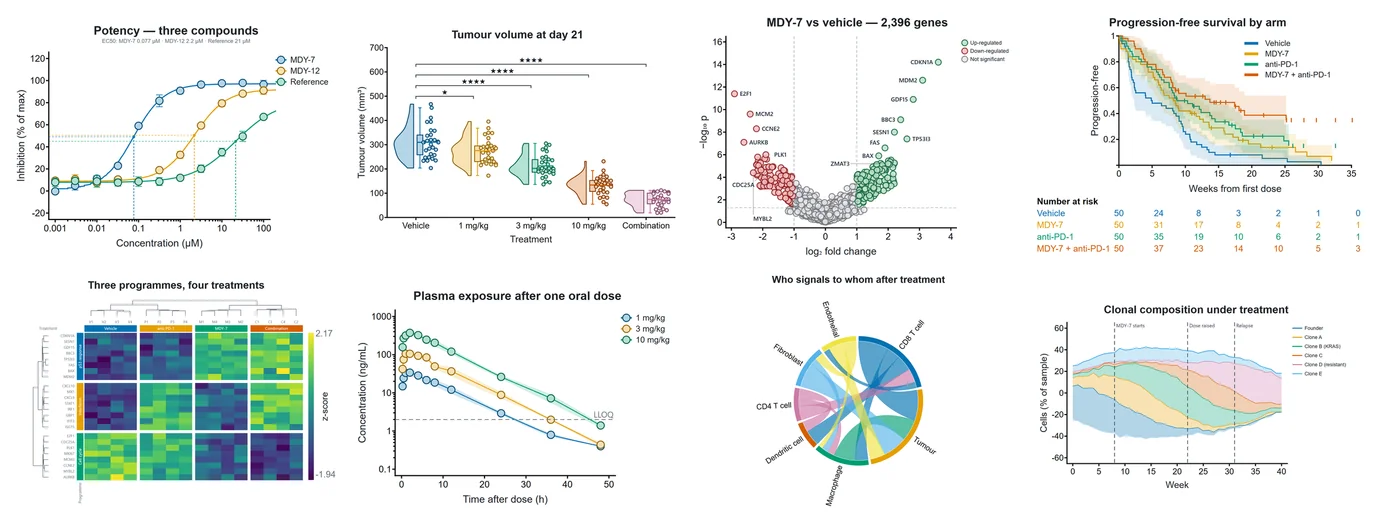
Scientific graphing and statistics on your desktop, with over 50 fully editable graph types, 49 analyses and publication-ready figures. Runs entirely offline.


The people
-
 Mikael Elias
Professor and Cargill Endowed Chair for Biotechnology Innovation
-
 Rakesh Sikdar
Researcher
-
 Mai Beauclaire
Postdoctoral associate
-
 Reed Jacobson
Postdoctoral associate
-
 Sharad Sarak
Postdoctoral associate
News
